Our Story
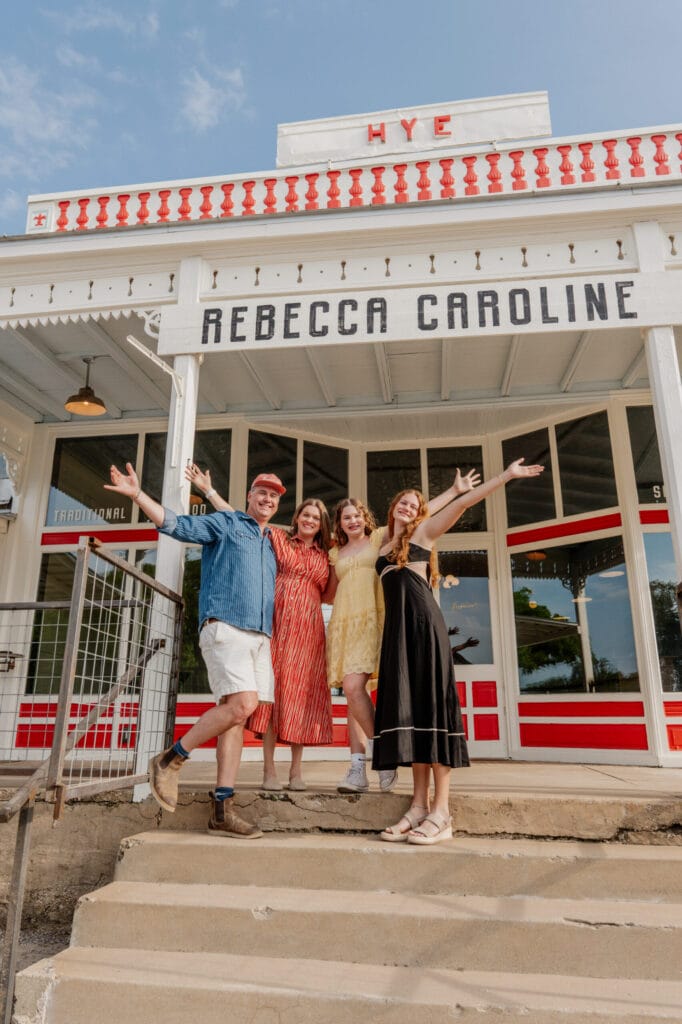
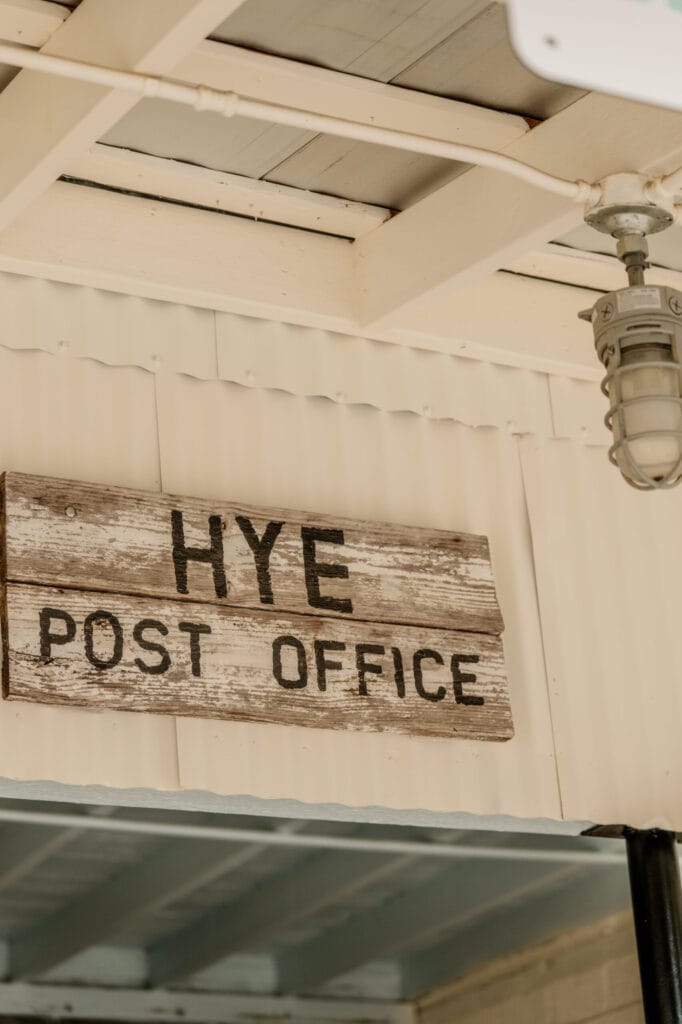
Rebecca Caroline is the sparkling house of William Chris Vineyards, named for June Rebecca and Tess Caroline — Chris and Katharine’s daughters. We make traditional-method sparkling wine from Texas grapes, and we pour it in the old Hye Post Office on US-290, right across the street from the winery where all of this started.
The wines took thirteen years to arrive. The reason why is best told by the man who waited.
A letter from our owner
There are moments when you recognize something special before the path is clear. For me, that moment came in 2013, when we produced our first traditional method sparkling wines in Texas. The quality was there. So was the challenge.
At the time, we were still building William Chris — securing fruit, farming vineyards, and supporting our team and families. A true sparkling program required significant investment, specialized equipment, and the right people. It wasn’t something we could take on yet, so we waited.
The turning point came years later. After tasting one of our pétillant naturel wines, my daughter, June Rebecca, asked why we didn’t make traditional method sparkling. As I explained how difficult it is, my youngest, Tess Caroline, said, “Just because something is really hard doesn’t mean it’s not worth doing.”
That stayed with me.
Not long after, I shared a bottle and a conversation with my friend and fellow Aggie winemaker, Seth Urbanek. We had talked for years about what Texas sparkling wine could be. That night, I decided to stop waiting and asked Seth to help lead the way.
Nearly four years later, we are at the start of something special — something that requires patience, intention, and a deep commitment to quality.
Our promise is simple: we will remain steadfast in crafting the highest-quality traditional method sparkling wines that Texas vineyards can offer. We will be patient — allowing the wines to tell us when they are ready. We will honor this time-tested method while staying true to who we are. And we will continue to grow the good life — together with you.
With gratitude,
Chris, Katharine, June Rebecca, Tess Caroline, Seth, and the Rebecca Caroline Team

What traditional method sparkling wine actually is
Most sparkling wine in the world gets its bubbles the fast way: a second fermentation in a big pressurised tank, then straight into bottle. It works, it is cheap, and it tastes like it.
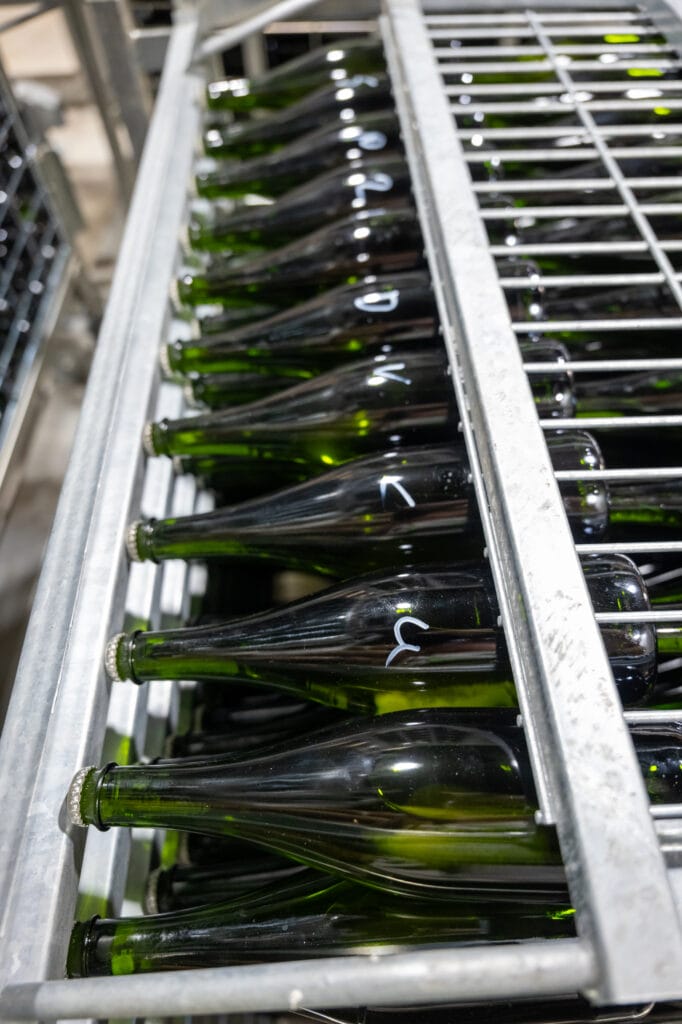
The traditional method — méthode traditionnelle, the same process used in Champagne — puts that second fermentation inside the individual bottle the wine is sold in. A small amount of yeast and sugar goes in, the bottle is sealed under a crown cap, and the wine ferments a second time in the dark. The carbon dioxide has nowhere to go, so it dissolves into the wine. That is where the bubbles come from, and it is why they are fine and persistent rather than coarse.
Then it waits. The spent yeast cells — the lees — break down slowly against the wine over months or years, a process called autolysis. This is what gives traditional-method sparkling its texture and its bread-and-pastry character. There is no shortcut for it; you either give the wine the time or you don’t.
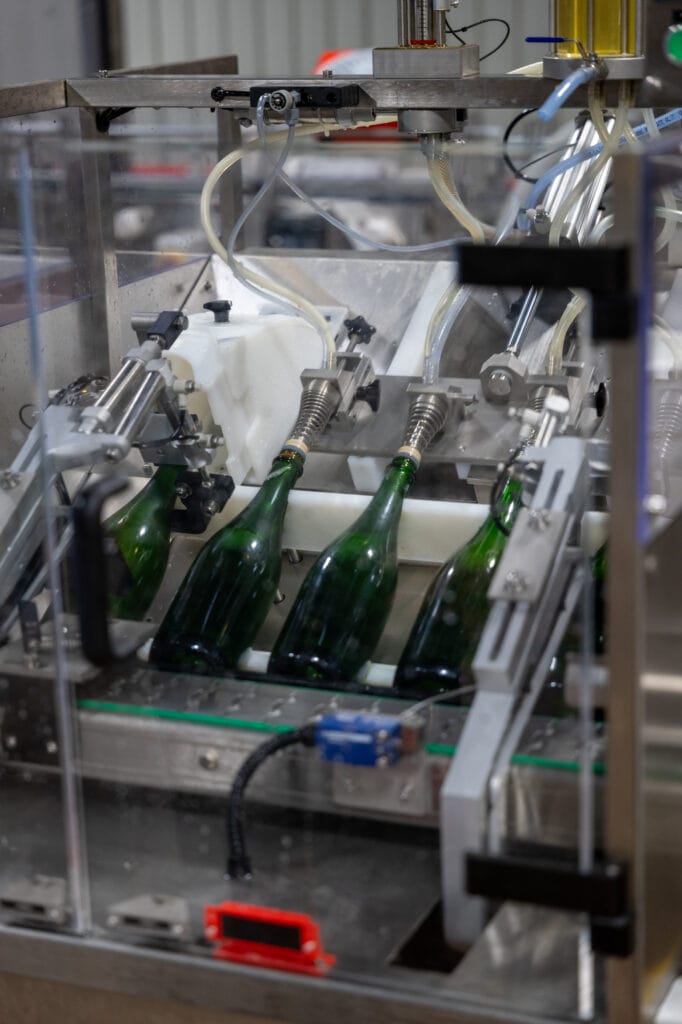
When it is ready, the bottles are riddled — turned and tilted a little at a time until the sediment collects in the neck — then the neck is frozen, the plug of sediment fired out under pressure, and the bottle topped up and corked. Disgorging, it is called. Every bottle, one at a time.
Why we grow it here
Sparkling wine starts with grapes picked early — before the sugar climbs and while the acid is still bright. That is a demanding thing to ask of a warm state, and it is the reason most people assume Texas cannot make wine like this.
They are picturing the wrong Texas. Our fruit comes from the high country: the Texas High Plains, and Dell Valley out in Hudspeth County, up against the New Mexico line. Elevation and cold nights hold the acid in the fruit through the season, which is precisely what a base wine needs.
We name the vineyard on every label — Boxing Rabbit, Dell Valley, Letkeman Family, Darst Ranch, John Dale — because the site is the whole point. The method is borrowed. The fruit is not.