Wine LibraryDarst Ranch Vineyard
Rebecca Caroline
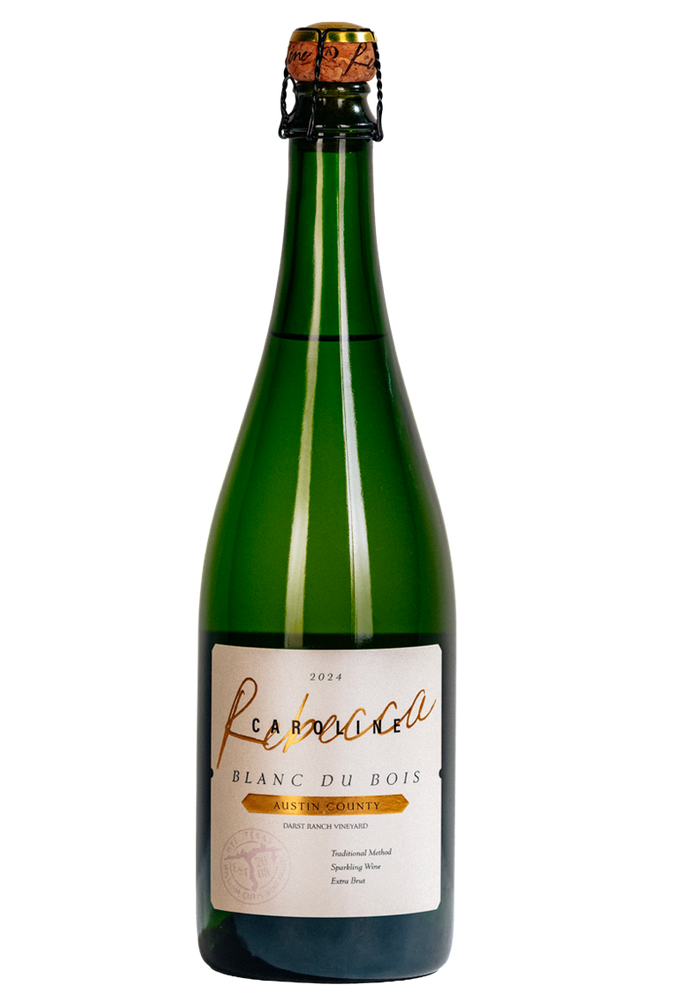
2024 Blanc du Bois
100% Blanc du Bois
- Vintage2024
- TypeSparkling
- StyleExtra Brut
- AppellationAustin County
- VineyardDarst Ranch Vineyard
- DrinkDrink before 2030
- ServeServe at 45°F
- WinemakerSeth Urbanek
- ABV
- 12%
- TA
- 8.89 g/L
- pH
- 3.37
- Cases Made
- 377
When to drink it
Drinking at its peak - chill wellDrink before 2030
Tasting Notes
Tame on the nose, but positively juicy on the palate! Fruity flavors of green apple, unripe pineapple, and melon rind curve into sourdough and hints of cereal. Blanc du Bois’ signature white flowers, honeysuckle, and lemongrass notes weave in and out of the hints of oyster shell.
The Vintage
Wet and healthy start to season - Moderate temperatures - Lengthy grape development periods
Winemaking
Hand-picked June 24th, the first grapes of the season. Gently pressed and fermented in stainless steel tank. Two select yeast strains were used and those lots blended after 5 months. Second fermentation in bottle. 18 months on the lees. Riddled and disgorged. Resealed with 5 g/L dosage.
Food Pairing
Pair with flavors as expressive as this wine, from shrimp spring rolls and onion tartlets all the way to a crawfish boil with corn, potato, bib, and all.
The Vineyard
In the summer of 2016, Paul and Nancy Darst landed on a hilltop in Kenney, Texas with 36 acres of rolling pastures. They established Darst Ranch Vineyards amid unique conditions: a near constant cooling breeze during the summer and hilltop views on all sides. The first 3 blocks of Blanc du Bois more than doubled by the next year on well-drained sandy loam.
Vine maturity: 7 years
Soil: Sandy loam of varying depths atop a layer of clay
Elevation: 318 feet
This aromatic hybrid variety is the most planted white grape in Texas due to its resilience in humidity.